
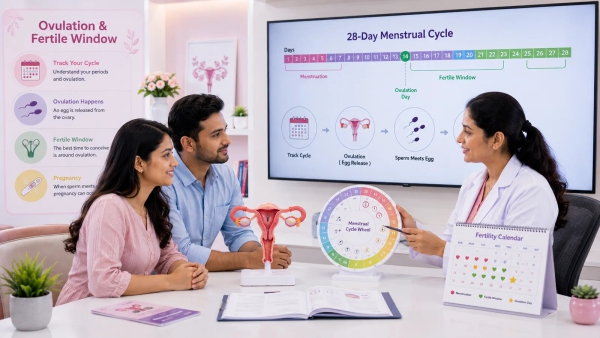
Planning a pregnancy can be an exciting journey, but it may also bring questions and uncertainty for many couples. Understanding the menstrual cycle and identifying fertile days can help couples make informed decisions about when to try for conception. Although several factors affect fertility, knowing when ovulation occurs is a useful starting point.
With regular cycle tracking and a better understanding of the fertile window, couples can improve the timing of intercourse and approach family planning with greater confidence.
Understanding Ovulation and the Menstrual Cycle
Ovulation is the stage of the menstrual cycle when an ovary releases a mature egg. This process is regulated by reproductive hormones, including follicle-stimulating hormone (FSH) and luteinizing hormone (LH). An increase in LH usually signals that ovulation is approaching, often within approximately 24–36 hours.
After release, the egg can generally be fertilized for around 12–24 hours. Sperm, however, may survive in the female reproductive tract for up to five days under suitable conditions. This means that conception is possible when intercourse takes place in the days leading up to ovulation, as well as around ovulation itself.
The menstrual cycle begins on the first day of a period and ends the day before the next period starts. Although a 28-day cycle is commonly discussed, cycle lengths vary between individuals. Ovulation does not always occur on the same calendar day every month.
How to Calculate Your Fertile Days
Tracking your menstrual cycle can help you estimate when you are most likely to conceive. Follow these simple steps:
1. Record your periods: Mark the first day of menstrual bleeding on a calendar or fertility-tracking app. Continue recording your periods for several months to understand your usual cycle length.
2. Estimate your ovulation day: Ovulation often occurs about 14 days before the next period begins. For example, in a regular 30-day cycle, ovulation may occur around day 16. However, this is only an estimate, and individual timing can differ.
3. Identify your fertile window: The fertile window generally includes the five days before ovulation and the day of ovulation. Having intercourse every one to two days during this period can help improve the chances of conception.
4. Observe changes in your body: Some women notice cervical mucus becoming clearer, wetter, and more slippery near ovulation. This change can provide another clue about approaching fertile days.
Using Ovulation Prediction Kits
Ovulation prediction kits are available at many pharmacies and can help identify the fertile period. Most urine-based kits detect a rise in LH, which usually occurs shortly before ovulation.
Follow the product instructions carefully and begin testing according to your expected cycle timing. These kits can be particularly helpful when cycle calculations alone do not provide enough information. However, an LH surge does not guarantee that ovulation has occurred or that pregnancy will follow.
Combining cycle records, physical signs, and ovulation tests may provide a clearer picture of your fertility pattern.
Lifestyle Habits That Support Reproductive Health
Healthy daily habits can support general and reproductive well-being. Aim for a balanced diet with vegetables, fruits, whole grains, protein, and healthy fats. Regular physical activity, sufficient sleep, and stress management can also contribute to overall health.
Avoid smoking and recreational drugs, and discuss alcohol use with a healthcare professional when planning pregnancy. Women preparing for pregnancy are generally advised to take 400 micrograms of folic acid daily, unless their healthcare professional recommends a different amount.
Traditional Ayurvedic and Unani approaches may also be considered for general wellness under appropriate professional guidance. Hashmi Dawakhana provides guidance on traditional medicines and health concerns. Such treatments should not be considered guaranteed solutions for infertility or substitutes for necessary fertility evaluation.
When Should You Seek Medical Advice?
If pregnancy does not occur despite regular, well-timed intercourse, professional assessment may help identify possible underlying factors. Women under 35 are generally advised to seek fertility evaluation after 12 months of trying, while women aged 35 or older should consider evaluation after six months. Those over 40 or with irregular periods, known reproductive conditions, or other fertility concerns may benefit from earlier advice.
Male reproductive health also matters. Sperm quality, hormonal health, and certain medical conditions can affect conception, so fertility assessment may involve both partners.
Conclusion
Understanding your fertile days is a practical way to plan intercourse around ovulation and improve the timing of your efforts to conceive. Regular cycle tracking, ovulation prediction kits, and healthy lifestyle habits can support informed family planning. Since fertility depends on several factors, seek professional guidance when needed and remember that conception may take time even when no underlying problem is identified.
About Hashmi Dawakhana
Hashmi Dawakhana is located at Qazi Zada Street, Amroha–244221, Uttar Pradesh, India. It provides care for a range of men’s and women’s health concerns, including sexual and reproductive health, diabetes, general health, and immunity-related issues. Special care is provided for concerns such as premature ejaculation, difficulty with erection, sexual weakness, reduced libido, women’s intimate health problems, and difficulties related to conception.
Patients who have not experienced relief even after seeking treatment from several places can visit Hashmi Dawakhana for better guidance and treatment. You can visit the clinic to obtain medicines or take advantage of the facility to order medicines online from home. Ayurvedic and Unani medicines are available and are prepared with good quality standards and scientific methods.
Health Consultation:
Looking for trusted health guidance? Call or WhatsApp at this number +91-9058577992 today for a FREE consultation with our health doctors. Your privacy, dignity, and well-being are our priority.

Leave a Reply
You must be logged in to post a comment.